Level 11 Unlocked Awesome Since 2011: A Practical Design Asset Analysis
In the competitive landscape of print-on-demand and apparel customization, finding ready-to-use design assets that are both stylistically current and technically robust is a constant challenge for creators. The design bundle titled Level 11 Unlocked Awesome Since 2011 presents itself as a solution, encapsulating a specific aesthetic within a versatile multi-format package. This analysis examines its characteristics, practical utility, and the realistic scenarios where it provides value for professionals and entrepreneurs in the field.
The Core Design and Its Appeal
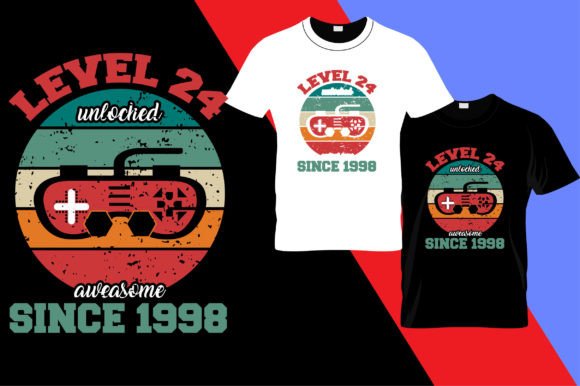
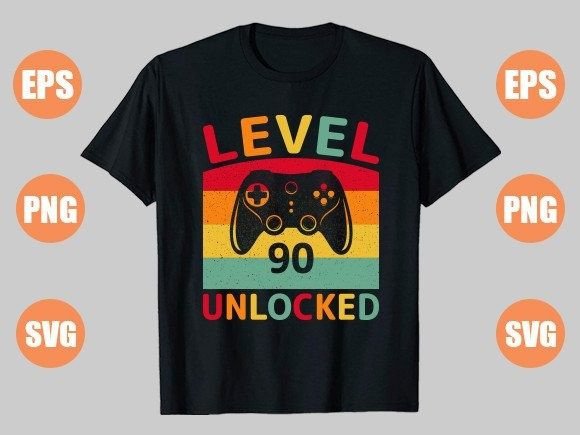
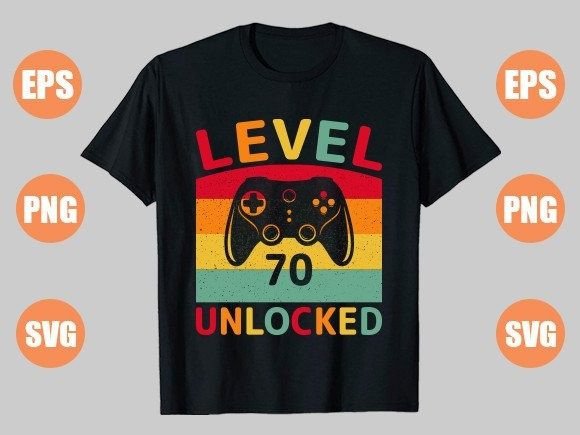
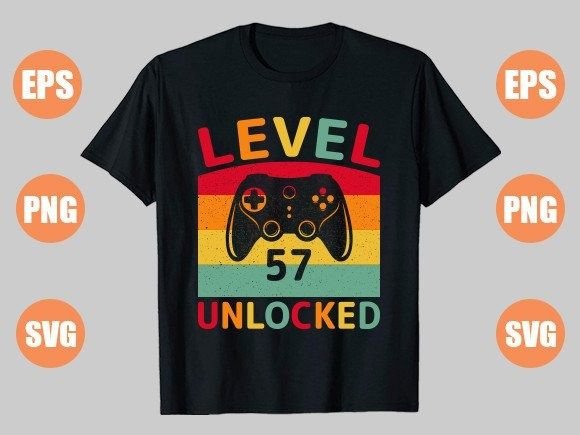
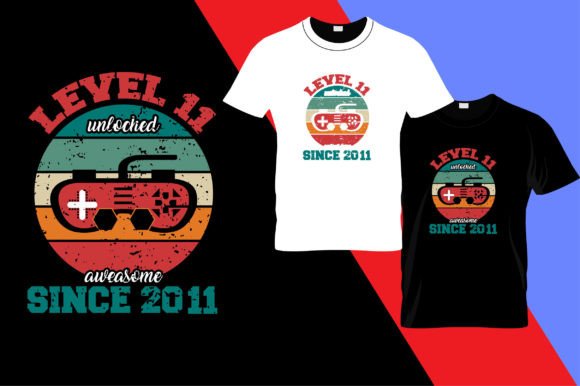
Level 11 Unlocked Awesome Since 2011 is fundamentally a typographic and graphic design centered on a gaming-inspired achievement motif. The phrase “Level 11 Unlocked Awesome Since 2011” suggests a celebration of longevity and mastery, a concept that resonates with communities built around persistence, such as gaming, tech hobbies, or even brand anniversaries. The design’s strength lies in its clear, declarative statement. It is not a complex illustration but a bold, text-centric graphic that prioritizes message over intricate artwork. This makes it highly adaptable; the visual focus is on the typography itself, allowing the words to be the primary decorative element on a product.
For commercial use, such clarity is advantageous. Designs that communicate a message directly often have a defined audience, making them easier to market than more abstract patterns. This particular design taps into a nostalgic yet ongoing zeitgeist—the culture of gaming and digital achievement that has been mainstream for well over a decade. Its value is not in universal abstraction but in targeted relevance.
Technical Specifications and Production Readiness
A significant aspect of this asset is its bundled file format offering. It includes an EPS file, an SVG file, a high-resolution PNG (4500×5400 at 300 DPI), and a JPEG, all compressed within a ZIP archive. This combination addresses the primary technical requirements for professional printing.
- The EPS and SVG files are vector formats. This is crucial for scalability. A user can resize the design infinitely without any loss of quality or pixelation, making it safe for application on small items like mugs or large surfaces like banners. The vector foundation also ensures clean, sharp edges for text, which is vital for the design’s typographic nature.
- The high-resolution PNG provides a ready-to-place raster image for users who may not have vector software. At 300 DPI, it meets the standard for high-quality sublimation, direct-to-garment, or inkjet printing on various substrates.
- The inclusion of a JPEG serves as a quick preview or use in digital mock-ups, though for physical print, the PNG or vector files are preferable.
The requirement to extract the files using standard tools like WinZIP, 7zip, or a system’s native archive utility is a normal step. This packaging method is efficient for distribution and is industry-standard. The technical presentation indicates the design is prepared for a production workflow, reducing preparatory work for the end-user.
Evaluation for Real-World Application
When considering real-world performance, several factors come into play. The design’s quality hinges on the execution of the vector artwork. Assuming clean paths and proper layering—as suggested by the format inclusion—the design should output with professional fidelity on physical products. Its usability is high due to the multiple formats; a graphic designer can manipulate the SVG in Illustrator, while a hobbyist can directly place the PNG in a print software template.
Flexibility is a noted strength. While the design is conceptually fixed, its application is not. It is explicitly mentioned for use on products like t-shirts, mugs, and bags via methods such as sublimation. This indicates its suitability for the print-on-demand ecosystem, including platforms for sublimation POD. The single-color or limited-color palette typical of such typographic designs also translates well to various print techniques, potentially reducing production costs and complexity.
The claim that these are “trend designs” and “most perfect for printing” should be assessed contextually. It is a trend-focused design, not a timeless classic. Its effectiveness will correlate with its relevance to the target customer’s interests. For a print seller, its long-term value may be periodic; it could see spikes in popularity around gaming events or within specific communities, rather than sustain steady sales indefinitely. This is not a limitation but a characteristic—it is a niche asset.
Audience Fit and Practical Recommendations
Who benefits most from Level 11 Unlocked Awesome Since 2011? The primary users fall into distinct groups.
- Print-on-Demand Entrepreneurs and Small Apparel Business Owners looking to quickly add a themed product line without investing in custom design time.
- Content Creators and Marketers in the gaming, tech, or espaces who might use the design for merchandising to support their brand or channel.
- Sublimation Practitioners and Craft Hobbyists seeking pre-made, high-quality graphics for personalized gifts or local market sales.
- Freelancers and Designers who may use this asset as a base component in a larger custom project for a client, leveraging the vector files for modification.
For these users, the design bundle eliminates the need for creation from scratch, providing a legal-to-use graphic for commercial products. A practical recommendation is to use the vector SVG or EPS file as the primary source. This allows for last-minute adjustments—changing colors, isolating elements, or integrating with other graphics—which the raster PNG does not permit. When creating mock-ups, the high-resolution PNG ensures a clean presentation on digital storefronts.
Professional Observations on Integration
Integrating such an asset into a business workflow requires a matching of aesthetic and audience. A seller should consider where “Level 11 Unlocked Awesome Since 2011” fits within their catalog. It is likely to complement other gaming-themed, motivational, or anniversary-style products. Its effectiveness will be enhanced by thoughtful product pairing—offering it on a range of items (t-shirt, mug, bag) as suggested—and targeted marketing to communities that identify with the message.
A possible consideration is the design’s specificity. The year “2011” anchors it to a particular time. This can be a powerful hook for audiences whose significant journey began around that period, but it may also feel dated to others. This is not inherently negative; niche specificity often converts better than vague generality. The user must assess whether their customer base includes groups celebrating a decade-plus of activity in a field.
The note encouraging contact for questions is a standard support offering, implying the distributor is prepared to address technical issues, which adds a layer of reliability to the transaction.
In summary, Level 11 Unlocked Awesome Since 2011 is a professionally packaged, niche design asset with clear commercial utility. Its value is tangible for users who require a ready-to-print, scalable graphic aligned with gaming and achievement culture. Its success in real-world application will depend less on any claim of being “perfect” and more on the strategic alignment between the design’s inherent message and the seller’s target market. For those whose projects or business models intersect with that message, it represents a practical and time-efficient resource.