Understanding the Shuttlecock: Badminton's Defining Equipment
The shuttlecock, often simply called the 'shuttle' or 'bird', is not merely a piece of badminton sport equipment; it is the central object that dictates the physics, pace, and strategy of the entire game. Unlike the standardized balls used in many other sports, the shuttlecock's unique aerodynamic design creates a flight behavior that is fundamental to badminton's identity. For professionals, coaches, and serious enthusiasts, a deep appreciation of this equipment is essential for both performance and informed procurement.
Anatomy and Aerodynamics: What Makes It Unique
A shuttlecock for badminton sport equipment consists of two primary types: feather and synthetic. The traditional feather shuttlecock, used in high-level competition, is crafted from goose or duck feathers fixed into a cork or foam base. Its key characteristic is an unpredictable, decelerating flight path. As it travels, the feathers create drag, causing the shuttle to slow dramatically and often tumble or rotate, demanding exceptional timing and reflex from players.
The synthetic shuttlecock, made from nylon or plastic skirt attached to a similar base, offers a more consistent and durable alternative. Its flight is generally faster and more stable, making it suitable for recreational play, training, and environments where cost and longevity are priorities. The choice between feather and synthetic is not trivial; it affects training outcomes, gameplay feel, and even the strategic depth of a match.
Evaluating Practical Value in Real-World Use
When assessing shuttlecocks for badminton sport equipment, several performance metrics come into play. Consistency is paramount. A high-quality feather shuttle from a reputable brand will exhibit uniform weight, feather alignment, and base hardness across a tube. This consistency ensures that during a fast-paced match, each serve and rally reacts predictably to player input, allowing skill to be the differentiating factor.
Durability and cost-effectiveness present a clear trade-off. Feather shuttlecocks are performance-optimal but fragile; a single mis-hit or game in humid conditions can destroy one. They represent a recurring expense for serious clubs. Synthetic shuttlecocks, while lacking the elite flight characteristics, provide excellent long-term value for schools, community centers, and casual players, often surviving hundreds of games.
Usability and Audience Fit
The target user profoundly influences the ideal choice. For competitive athletes, national associations, and tournament organizers, the feather shuttlecock is non-negotiable. Its performance is integral to the sport as defined by the Badminton World Federation (BWF). These users benefit from investing in top-tier brands known for rigorous quality control.
For coaches running developmental programs, synthetic shuttlecocks can be incredibly useful. Their stable flight allows beginners to focus on stroke technique and movement without the added variable of a tumbling shuttle. Coaches may then introduce feather shuttlecocks as players advance to refine their timing and adaptation skills.
Recreational players, small gym owners, and corporate event planners prioritizing fun and minimal overhead will find synthetic shuttlecocks perfectly effective. Their reliability and lower cost enable badminton to be offered as a consistent activity without technical frustration or high maintenance.
The Role of Vector Graphics in Sport Visual Communication
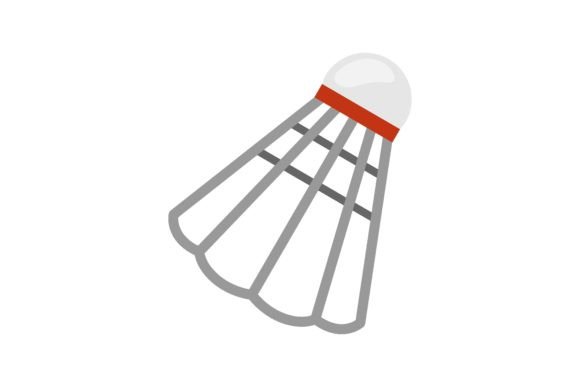
Separate from the physical equipment, the concept of a shuttlecock for badminton sport equipment cartoon vector holds significant practical value for a different professional audience. This includes marketers, content creators, educators, and publishers. A clean, scalable vector illustration of a shuttlecock, often grouped with vectors of balls for other sports like bowling, boxing gloves, or golf clubs, serves as a versatile digital asset.
Such vectors are effective for creating infographics explaining sport rules, designing instructional materials for schools, developing branded content for fitness apps, or enhancing websites for sports clubs. Their strength lies in flexibility and presentation. They can be resized, colored, and integrated without loss of quality, ensuring professional visual consistency across brochures, social media, and presentations. Unlike photographs, they strip away distracting background context, focusing purely on the equipment iconography.
Professional Observations on Vector Asset Selection
When selecting sport equipment vector packs, professionals should evaluate the artistic consistency and semantic accuracy of the illustrations. A well-drawn shuttlecock vector should clearly distinguish between a feather and synthetic silhouette if the pack claims to be detailed. The set's usefulness increases if the shuttlecock, bowling ball, boxing glove, and golf club vectors share a cohesive style—similar line weights, color palettes, and perspective—making them immediately usable together in a single project.
A possible limitation of generic "sport vector" packs is oversimplification. An inaccurate or stylized shuttlecock illustration might misrepresent the equipment to a technical audience. Therefore, for projects targeting badminton purists, seeking a specialized or more anatomically precise vector is recommended.
Integration into Workflows and Projects
For the physical shuttlecock, integrating the right type into your workflow requires an honest assessment of your primary goals. Is it peak performance, cost control, or player accessibility? A club might use synthetic shuttlecocks for general member play and feather shuttlecocks for advanced coaching sessions. An event planner would standardize on synthetic for guaranteed reliability across all participants.
For the digital vector asset, its integration into a creative or educational workflow is straightforward. It becomes a foundational element in a design library. Its effectiveness is measured by how often it is reused and how seamlessly it communicates the intended concept—be it "badminton," "sport equipment," or "recreational activities"—without requiring additional explanation.
In conclusion, whether considering the tangible projectile that defines a global sport or the digital illustration that represents it, the shuttlecock for badminton sport equipment demands informed selection. Its value is not generic; it is deeply contextual, deriving from its fit with the user's specific demands for performance, durability, visual communication, and cost. By understanding these layers, professionals and enthusiasts can make choices that genuinely enhance their playing experience, coaching outcomes, or creative projects.